
How it Works
Images are uploaded online, and our AI reviews these against our unique algorithm. In analysing a single image, the model will typically process around 50,000 tokens, with a token being the smallest unit into which text or image data can be
broken down for an AI model to process. A token could be a concept, a word or part of an image.
The analysis provides 17 defined scores which provide a detailed picture of design effectiveness and identifies areas for improvement. These are combined to create a total score which can be measured versus a normative or used in A/B testing. Finally specific recommendations for improvement are provided
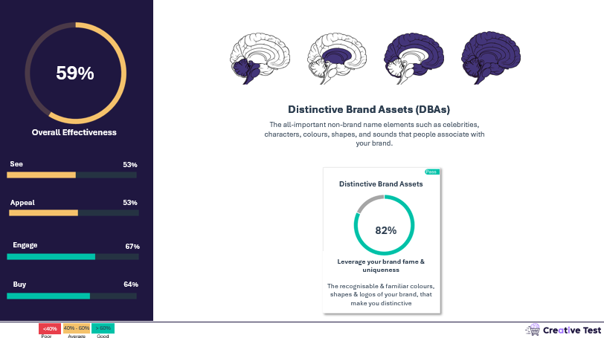
Overall Effectiveness
Calculated from all sub-category
results, provides a clear measure of design effectiveness, and can be compared to a normative or used for A/B testing
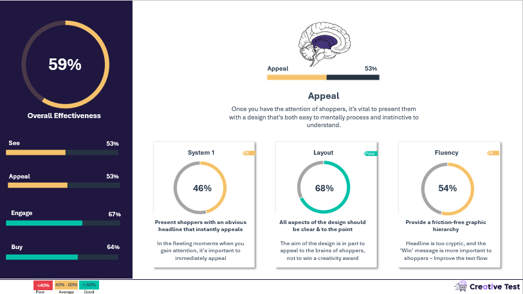
The Appeal Score
Once you have the attention
of shoppers, it’s vital to present them with a design
that’s both easy to mentally process and instinctive to
understand.
System 1, Layout, Fluency
- Colours:
Not just the colours themselves, but how they combine to create, clarity and focus supporting design fluency and a positive psychological impact on shopper perception
- Images:
How effectively do the visuals convey meaning, relevance and emotion to encourage instinctive engagement.
- Emotion:
The emotional impact and resonance of the design. How well does it provide positive unconscious feelings to help Shoppers feel good about the product and be more inclined to buy
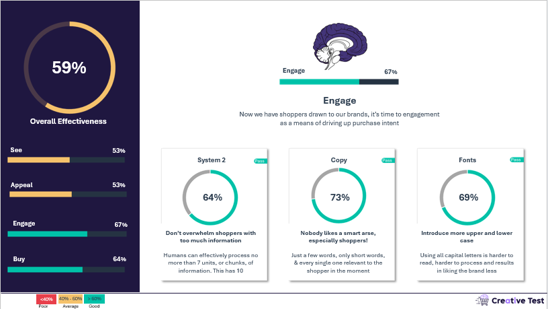
The Engage Score
System 2, Copy, Fonts
- System 2:
Measures how effectively your design provides the facts, details, and cues that help the more analytical brain evaluate and justify a purchase.
- Copy:
The effectiveness of your written content in conveying the message clearly and persuasively.
- Fonts:
Evaluates how typology supports fluency and tone, ensuring your message is easy to read, credible and emotionally aligned.
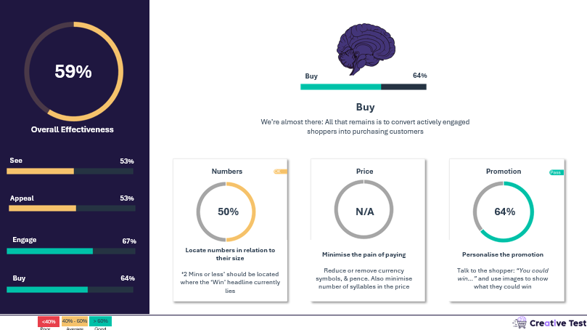
The Buy Score
The final hurdle, convert
actively engaged and interested shoppers into buyers.
Does it provide enough information and value cues that
this product is a satisficing* choice
System 2, Copy, Fonts
- Numbers:
How well numerical information (e.g., discounts, prices, statistics) is presented and understood.
- Price:
Is price communicated clearly and optimally to create positive perceptions of value..
- Promotion:
How effectively promotional messages drive engagement and action
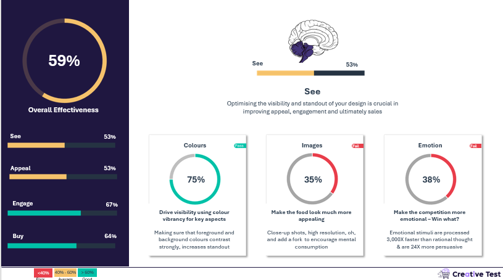
The See Score
Measures the effectiveness of your design in gaining that all important initial shopper attention. Key (but not only) drivers of initial attention are:
Colours, Images, Emotion
- Colours:
Not just the colours themselves, but how they combine to create, clarity and focus supporting design fluency and a positive psychological impact on shopper perception
- Images:
The imagery score reflects how well visuals support messaging and engagement
- Emotion:
The emotional impact and resonance of the design. How well does it provide positive unconscious feelings.

Distinctive Brand Assets
DBA’s
Evaluates how well you use recognisable and familiar brand elements that make your product instantly identifiable and distinctive to support mental availability
DBA Clarity
Are you presenting assets in the most familiar forms to reinforce recognition.
DBA Orientations
Examines how clearly assets are displayed and aligned, ensuring they’re immediately recognisable from a shopper’s point of view
Why Distinctive Brand Assets sit outside the four main scores
While Creative Test visualises results under four headline stages , See, Appeal, Engage, Buy , each category actually influences several stages of the journey. Design elements don’t operate in isolation: for example, colours affect both attention and emotion, copy shapes engagement and trust, and layout drives fluency as well as appeal.
Distinctive Brand Assets (DBAs) are simply the most cross-cutting example of this interdependence. They strengthen every stage , helping shoppers see the brand more easily, appeal through familiarity, engage by reinforcing credibility and recognition, and buy by reducing hesitation and decision effort. Although our algorithm accounts for these interactions beneath the surface, we show DBAs separately because their influence is both broad and unique. They’re the connective tissue of brand effectiveness, building memory structures and fluency that amplify performance across the entire See → Appeal → Engage → Buy




The Recommendations
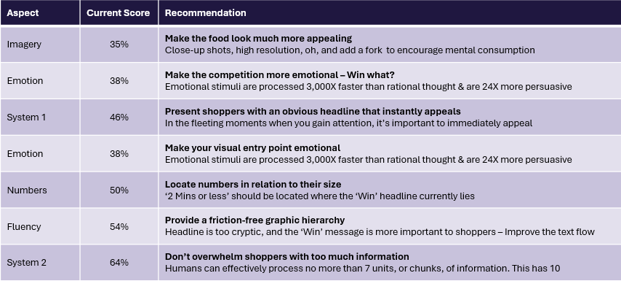
The AI reviews the score results and automatically recommends specific actions that will have a significant impact on design effectiveness.
When analysing your results, we recommend you start by identifying what is the primary role of this design (our priorities may vary depending on the material being teste and which are the lowest performing categories.
Then, examine which sub-category is driving the scores you need to improve.
For example:
- A high Buy score depends on strong performance in Numbers, Price, and Promotion. Not all shopper marketing is Buy focused, so if these elements are less relevant, you can prioritise See, Appeal, and Engage scores instead
The system recommendations are there to provide clear actionable next steps.
If you’re not sure you can contact the Creative Test team for support and guidance